
Timeline of key models
1940s
Lewin: Field Theory(contextual foundations)
1960s
Tuckman: Forming–Storming–Norming–Performing
1980s
Belbin: Team RolesGersick: Punctuated Equilibrium
1990s
McGrath: TIPWheelan: IMGD
Tubbs: Four-Stage Model
2000s
Lencioni: Five DysfunctionsStacey: Complexity Theory
The history
Linear Stage ModelsBruce Tuckman (1965) remains the most cited originator of stage-based team development. HisForming–Storming–Norming–Performing model (later expanded with Adjourning, 1977) assumes a linear, sequential progression of team development. It provides a clear, intuitive framework but has been critiqued for its prescriptive nature, which may oversimplify the often non-linear, iterative nature of real-world team development.
Michael T. Tubb’s (1995) model similarly proposes a linear four-phase process (Orientation, Conflict, Consensus, Closure), largely overlapping with Tuckman but with a communication studies lens. Its contribution lies in connecting communication dynamics with developmental phases.
Critique: Tuckman’s model lacks empirical rigor and assumes all teams move through stages uniformly—something later theorists would challenge.
Susan Wheelan’s Integrated Model of Group Development (IMGD) builds on Tuckman but grounds each stage inobservable behavior and leadership transitions, enhancing practical relevance. Wheelan’s stages (Dependency, Counter-dependency, Trust, Productivity, and Termination) are supported by decades of research and offer amore evidence-based refinement of the stage model.Michael T. Tubb’s (1995) model similarly proposes a linear four-phase process (Orientation, Conflict, Consensus, Closure), largely overlapping with Tuckman but with a communication studies lens. Its contribution lies in connecting communication dynamics with developmental phases.
Temporal and Episodic ModelsConnie Gersick (1988, 1991) provided a critical departure with her Punctuated Equilibrium Model. Rather than progressing linearly, teams exhibit long periods of inertia punctuated by bursts of activity—often at the temporal midpoint.
Strength: Gersick’s model reflects the realities of many task-focused, deadline-driven teams and accounts for external influences and time pressure. Limitation: It is most applicable to short-term, project-based teams rather than long-term organizational units.
Functional and Role-Based approachedMeredith Belbin (1981) shifted focus from stages to team roles. His model of nine team roles (e.g., Shaper, Plant, Monitor-Evaluator) emphasizes individual personality traits and their influence on team balance. While widely used in team-building workshops, Belbin’s model faces criticism for lacking psychometric robustness and underplaying situational and systemic influences.
McGrath’s (1991) Time, Interaction, and Performance (TIP) Theory adds another layer by identifying four team functions—inception, conflict resolution, problem-solving, execution—that teams cycle through repeatedly, not sequentially. This cyclical, task-centered model offers a more flexible, functional view than stage-based approaches.
McGrath’s (1991) Time, Interaction, and Performance (TIP) Theory adds another layer by identifying four team functions—inception, conflict resolution, problem-solving, execution—that teams cycle through repeatedly, not sequentially. This cyclical, task-centered model offers a more flexible, functional view than stage-based approaches.
DysfunctionPatrick Lencioni’s Five Dysfunctions of a Team (2002) represents a turn toward diagnosing failure modes rather than mapping ideal development. His pyramid model highlights trust, conflict, commitment, accountability, and results. Though popular in leadership training, it is based more on anecdotal evidence than systematic research, and its model doesn’t match the lived experience of working in teams.
Complex SystemsRalph Stacey’s Complexity Theory (1996+) takes the most radical stance by rejecting prescriptive models altogether. Stacey argues that teams operate in complex adaptive systems, where unpredictability, non-linearity, and self-organization define behavior.
Insight: Stacey’s work is foundational in understanding team dynamics in turbulent, uncertain environments, such as agile or innovation-driven teams. Challenge: Its abstract nature makes practical application difficult without strong facilitation or systems thinking capability.
Stacey’s work has informed more recent complexity-informed contributions such as Snowden’s Cynefin and Arrow’s Small Groups as Complex Systems.A modern model for modern contextThe history of team dynamics models reflects a shift from structure to complexity. Early models like Tuckman’s provided accessible foundations, while theorists like Gersick and Stacey introduced a more nuanced, real-world complexity. By contrast, functional and role based approaches presume the team is a sum of its constituents, and so doesn’t treat the team as the unit of analysis. Dysfunction oriented tools are too narrow in scope and suffer from detachment.
While no single model fully captures the dynamic nature of team behavior, integrating developmental stages (Tuckman, Wheelan) and systemic unpredictability (Stacey) offers a more complete toolkit for analyzing and supporting team effectiveness.
While no single model fully captures the dynamic nature of team behavior, integrating developmental stages (Tuckman, Wheelan) and systemic unpredictability (Stacey) offers a more complete toolkit for analyzing and supporting team effectiveness.
Enter Shivoo...
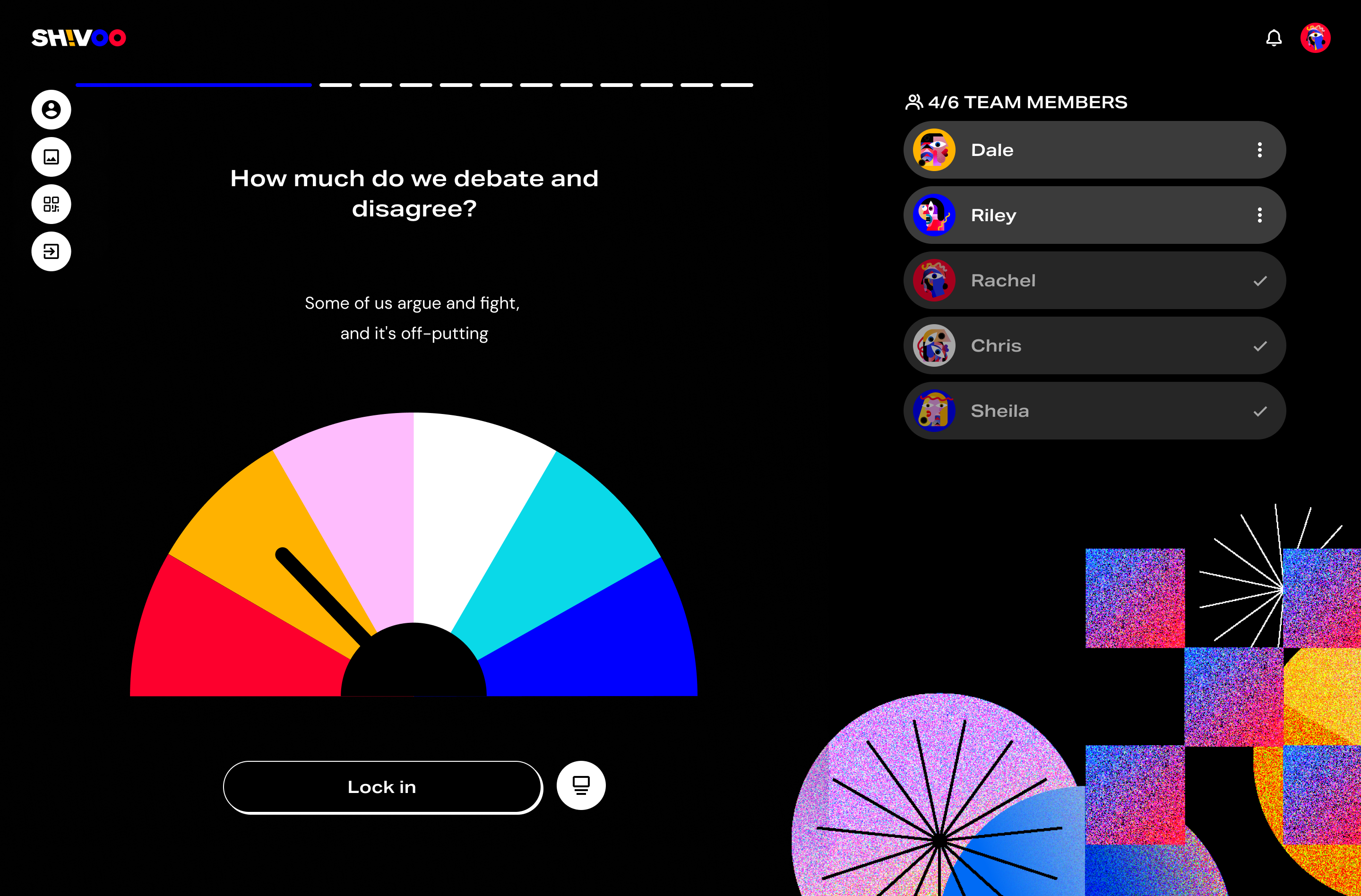
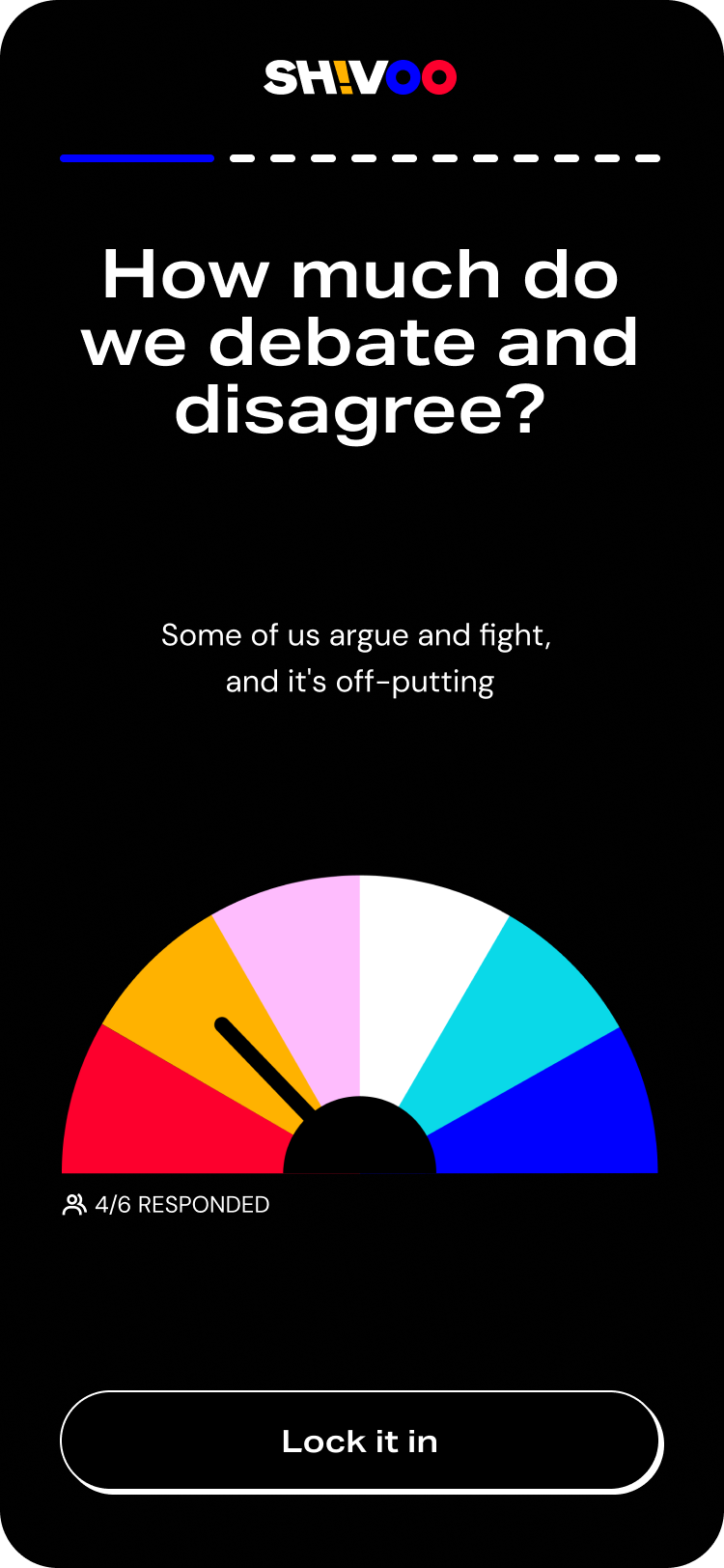
Our combined 40+ years of field research and practical experience in working with teams, and more than 10 years of academic research into the complex dynamics of teams resulted in a PhD in complex team dynamics. From this PhD (Maxwell, 2022) Shivoo was born. Shivoo is grounded in the complex teams work of Stacey, Snowden (Cynefin) and Arrow, and in the development and deliberate practice work of K. Anders Ericsson. It is a tool that outlines the six practices teams need to continually work at in order to develop and improve, no matter their context or level.As such, the Shivoo model and the research behind it underpins other team dynamics models and approaches, providing a foundation on which to build your team development and performance.
Maxwell, C., 2022. It’s Just not That Simple a Complex Adaptive Systems Approach to Understanding Changing Dynamics in Leadership Teams. University of Technology Sydney (Australia).
Ready to see
how it really
works?
Frequently asked questions
Getting Started
+
Can we run Shivoo by ourselves?
+
Yes — and that’s one of the big advantages.
You can run Shivoo:
- With your team, in your regular meeting
- Without a facilitator
- Or with a coach if you want deeper support
It’s designed to work either way.
Do I need to be accredited to run Shivoo?
+
No.
Shivoo is designed to be easy to use straight away.
You can:
- Jump in and run your first squiz immediately
- Or review guides and support if you prefer
Most teams are up and running within minutes.
How long does a Shivoo session take?
+
Most squizzes take 30 – 60 minutes.
Short enough to fit into a regular team meeting — long enough to generate meaningful insight and discussion.
Do we need to prepare anything in advance?
+
No.
There’s no pre - work, no surveys, and no setup burden
Just bring your team — and start.
Using Shivoo
+
What is a "Squiz"?
+
A “squiz” is what at we call each time you run Shivoo with your team.
It’s simply:
- A structured moment to “have a look” at how your team is working.
Yes, it’s an Australian term. And yes, you can add “mate” if you like.
What makes Shivoo different from other team tools?
+
Most tools:
- Survey individuals
- Deliver reports later
Shivoo:
- Works in real time
- Focuses on the team (not individuals)
- Combines measurement, conversation, and development
It doesn’t just measure your team — it helps you improve it.
What happens if our team disagrees on answers?
+
That’s where the value is.
Disagreement:
- Surfaces different perspectives
- Triggers important conversations
- Helps build alignment
Shivoo is designed to use disagreement — not avoid it.
What kind of teams is Shivoo for?
+
Shivoo works for any team that works together regularly.
Including:
- Leadership teams
- Functional teams
- Project teams
If you collaborate, Shivoo applies.
How often should we run Shivoo?
+
Most teams run a squiz every 6 – 12 weeks.
That gives enough time to:
- Act on insights
- Build new habits
- See measurable progress
Pricing & Scaling
+
How does pricing work?
+
Shivoo is a simple annual subscription.
While your subscription is active, you can:
- Run as many Squizzes as you like.
- Access your results anytime
- Track progress over time
- Compare against our global database
- Use our tips, tools, and development guidance
No limits. No per-use charges. Just ongoing access.
We have multiple teams in our organization, can we link them together?
+
Yes — Shivoo scales across teams.
With Enterprise Shivoo, you can:
- Manage multiple teams in one place
- Compare performance across your organisation
- Access organisation - level insights
You can start with as few as two teams and grow from there.
Data & Credibility
+
What data do you capture and hold?
+
We measure the team — not individuals.
That means:
- We store team - level answers and result
- We do not track individual responses
- We do not store personal or identifiable participant data
We use your team’s data to:
- Show your results
- Enable comparisons with other teams
- We do not store personal or identifiable participant data
Your team gets insight — without individual exposure.
Is this a credible tool? Does it have a robust basis?
+
Yes — Shivoo is built on rigorous research and real - world application.
It draws on:
- 40+ years of field experience
- 10+ years of academic research
- A PhD in complex team dynamics
It is informed by leading thinkers in complexity and performance, including:
- Stacey
- Snowden (Cynefin)
- Arrow
- Ericsson
In short: it’s academically grounded, but built to be practical.
If I cancel my subscription, do I lose access to my data?
+
Yes — once your subscription ends, you lose access to your team’s results.
Your de-identified data remains part of the overall dataset (for benchmarking), but:
- It is no longer accessible to you
- It cannot be recovered later
This approach protects privacy and keeps the system clean.